Pulso
B2C · Concept project · Mobile
In Mexico, many patients look for blood donors through public social media posts. Pulso replaces those posts with a private, two-sided app that matches donors and patients by blood type and location, so a request doesn't depend on whose story moves people most.
Project Details
- 01Timeline
- 2022, rebuilt in 2026
- 02Role
- Product definition and design
- 03Tools
- Figma, Claude, Claude Code
- 04Status
- Concept, front-end prototype
Context
8.3% of the 1.6 million blood donations in Mexico in 2023 were voluntary. The rest came from relatives or acquaintances of hospitalized patients.
Secretaría de Salud (CNTS), 2024
The idea came from my own family's search for donors on social media. My 2022 version worked like the apps I'd researched: a story, a plea for empathy. In 2026 I rebuilt it around one question: how to connect donors and patients without a story deciding who gets help.
Key Decisions
01
The system asks, nobody searches
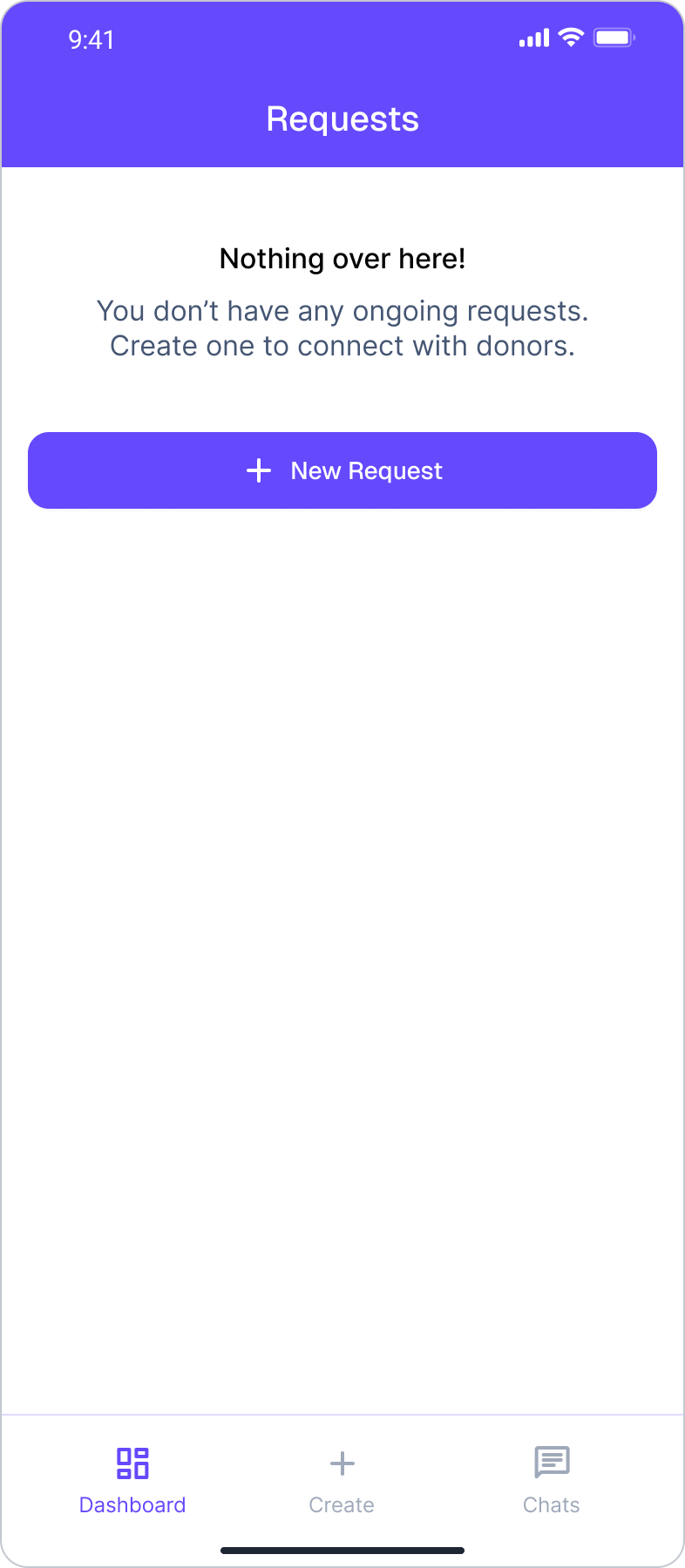
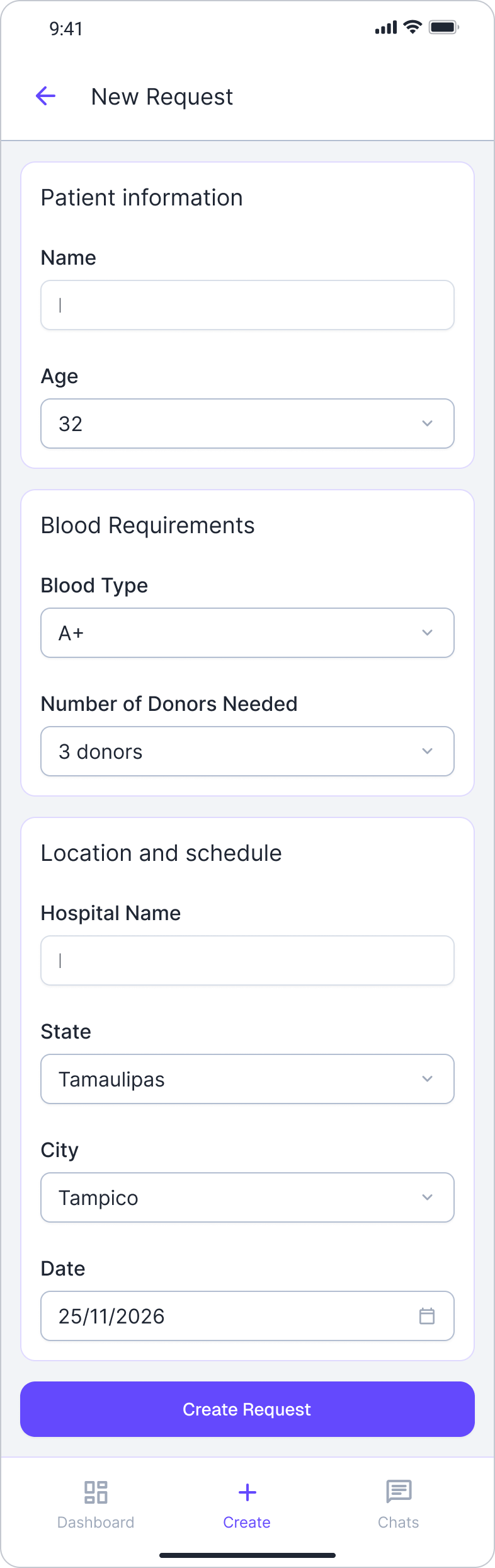
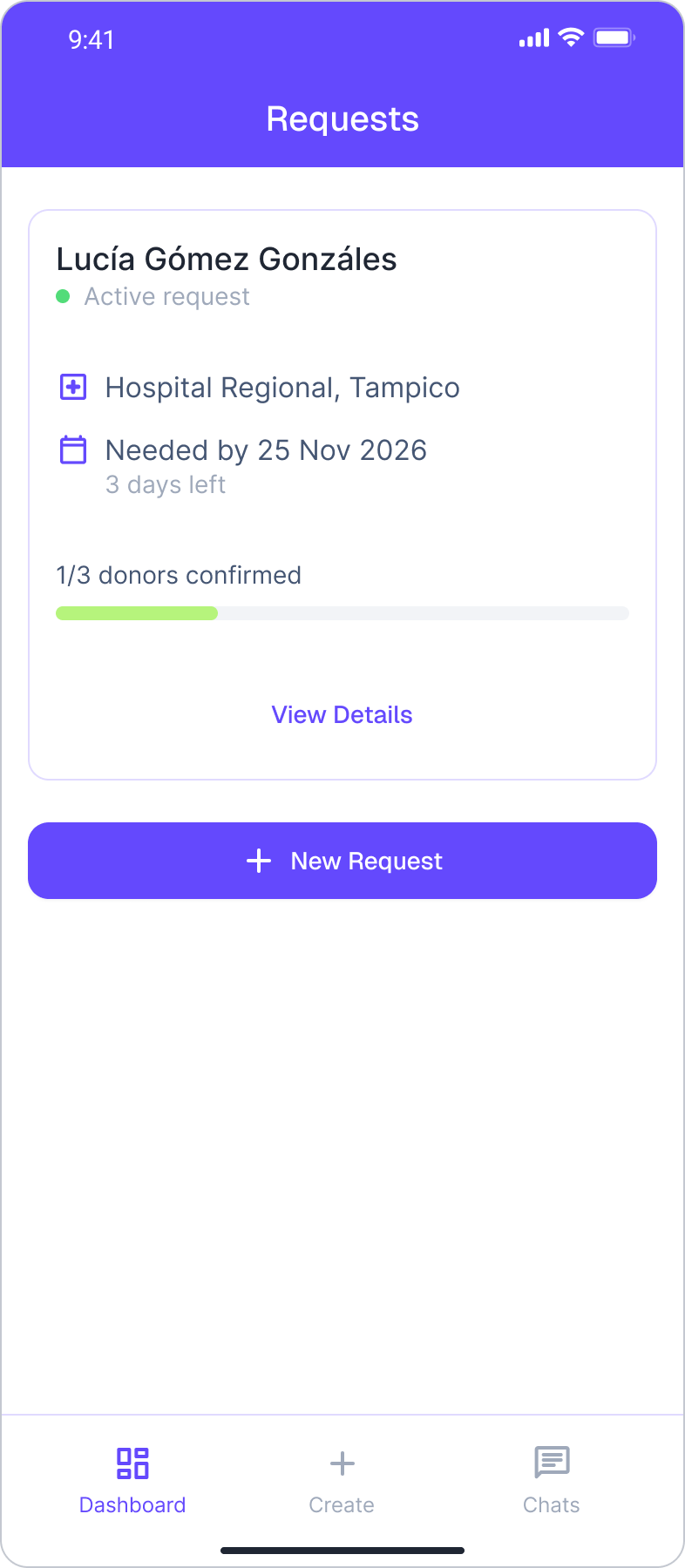
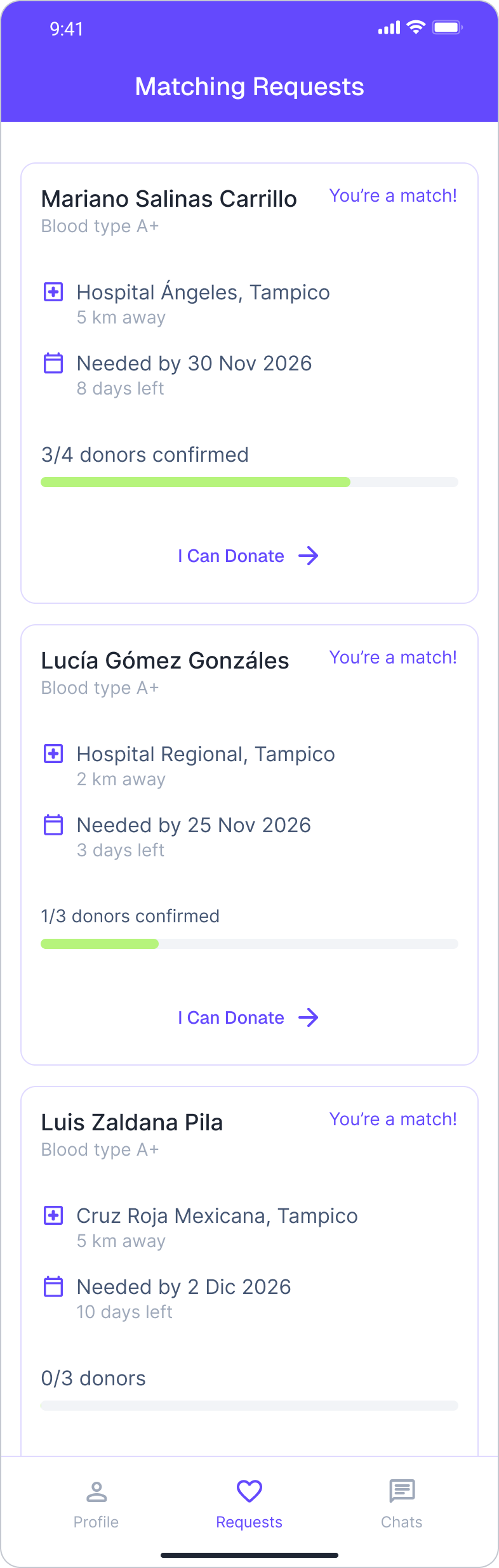
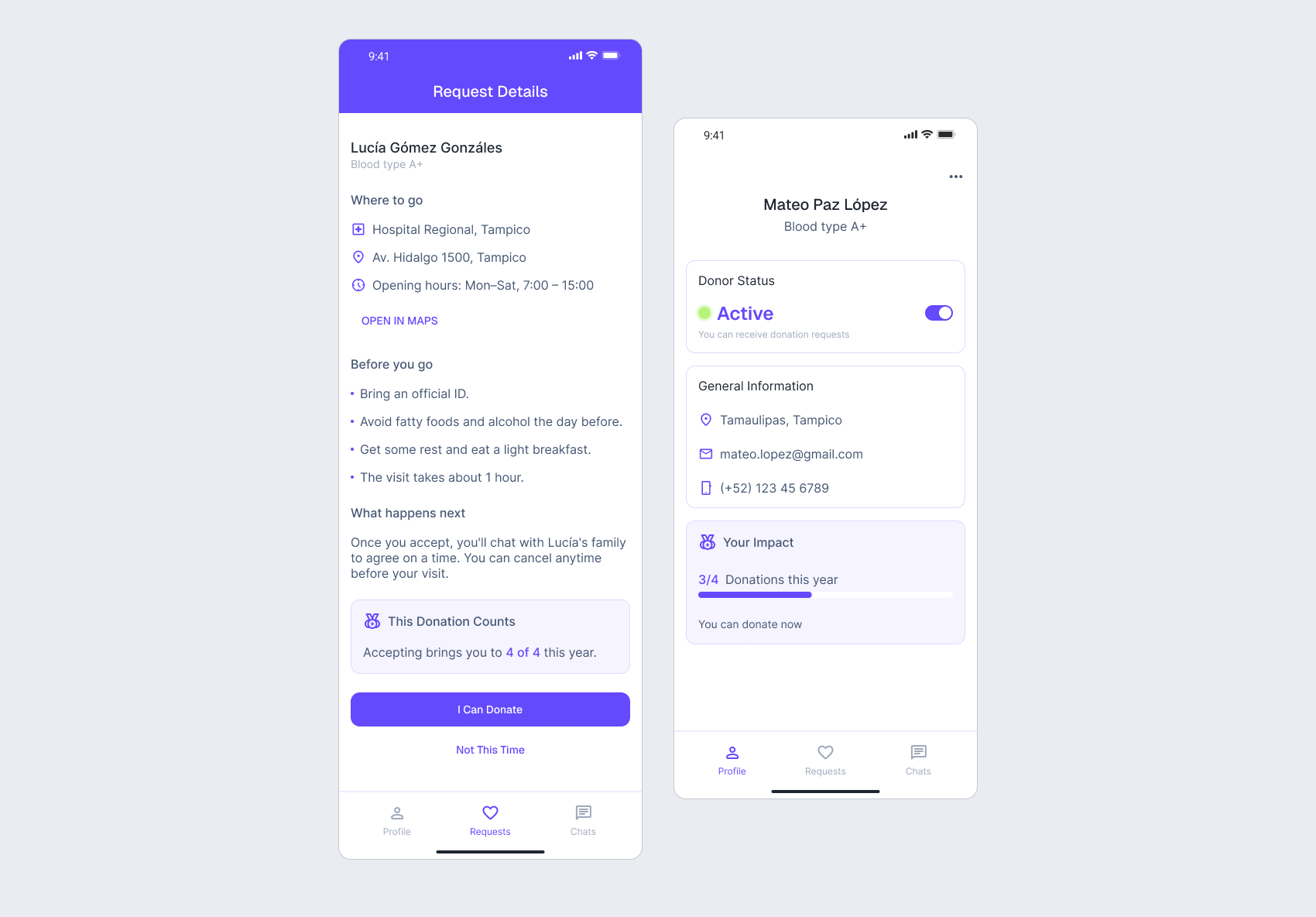
The apps I researched let patients contact donors, and donors read each story. I flipped it: a patient creates a request and can't search or contact anyone. Lack of time was the top reason for not donating blood voluntarily (21.4%), so donors see the closest compatible requests, with only a name, blood type and hospital.
Gabinete, 2019 · n=754, near hospitals in Mexico City
02
The donor accepts before anyone talks
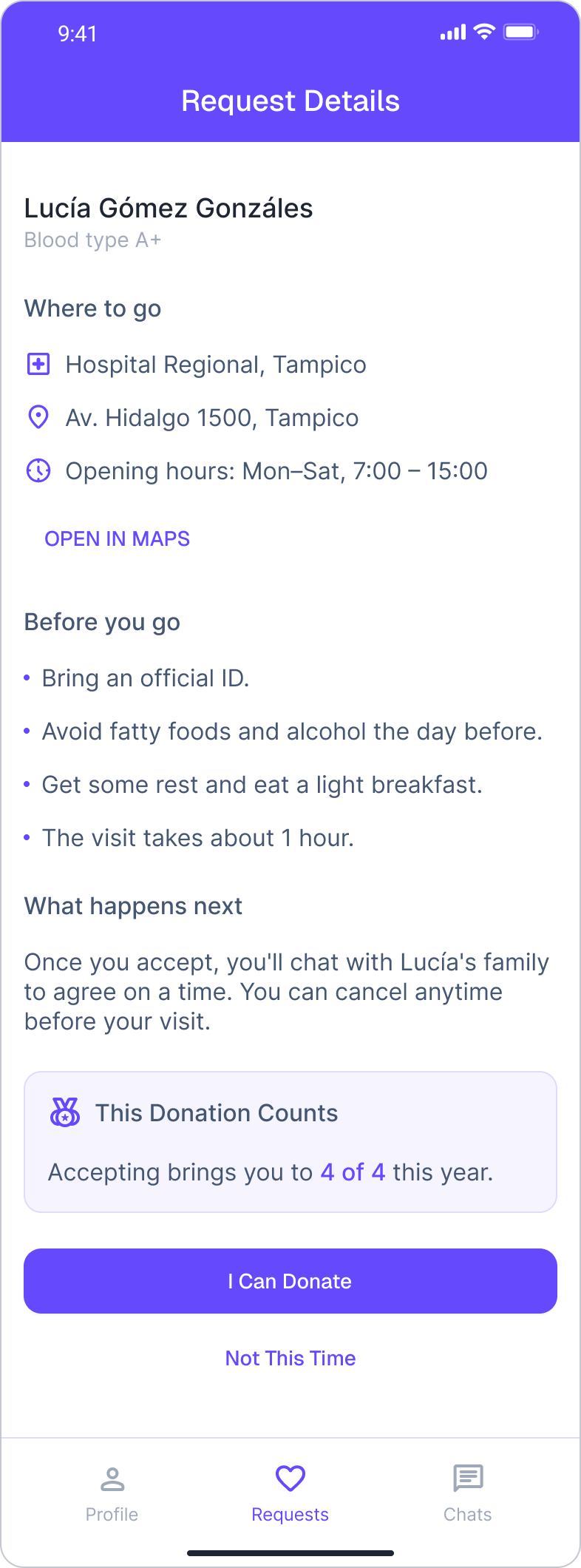
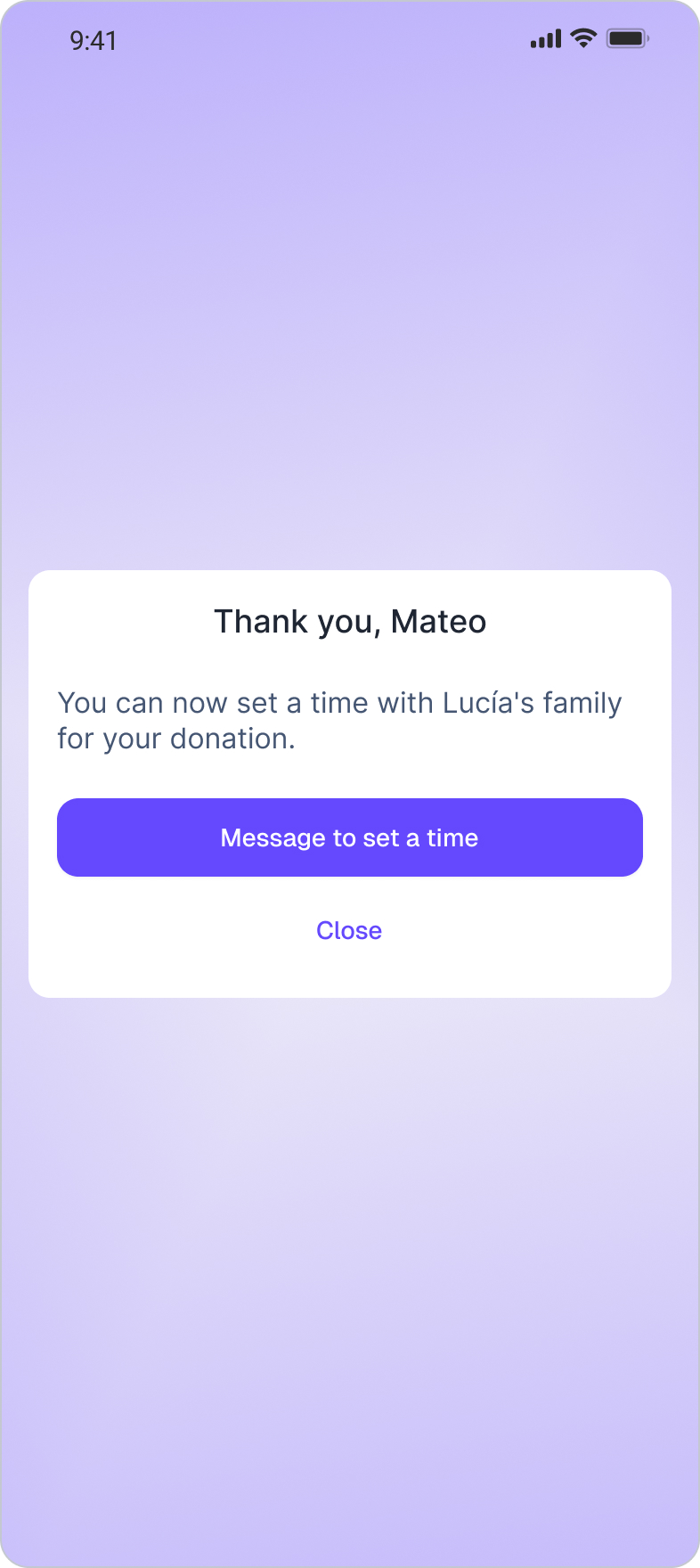
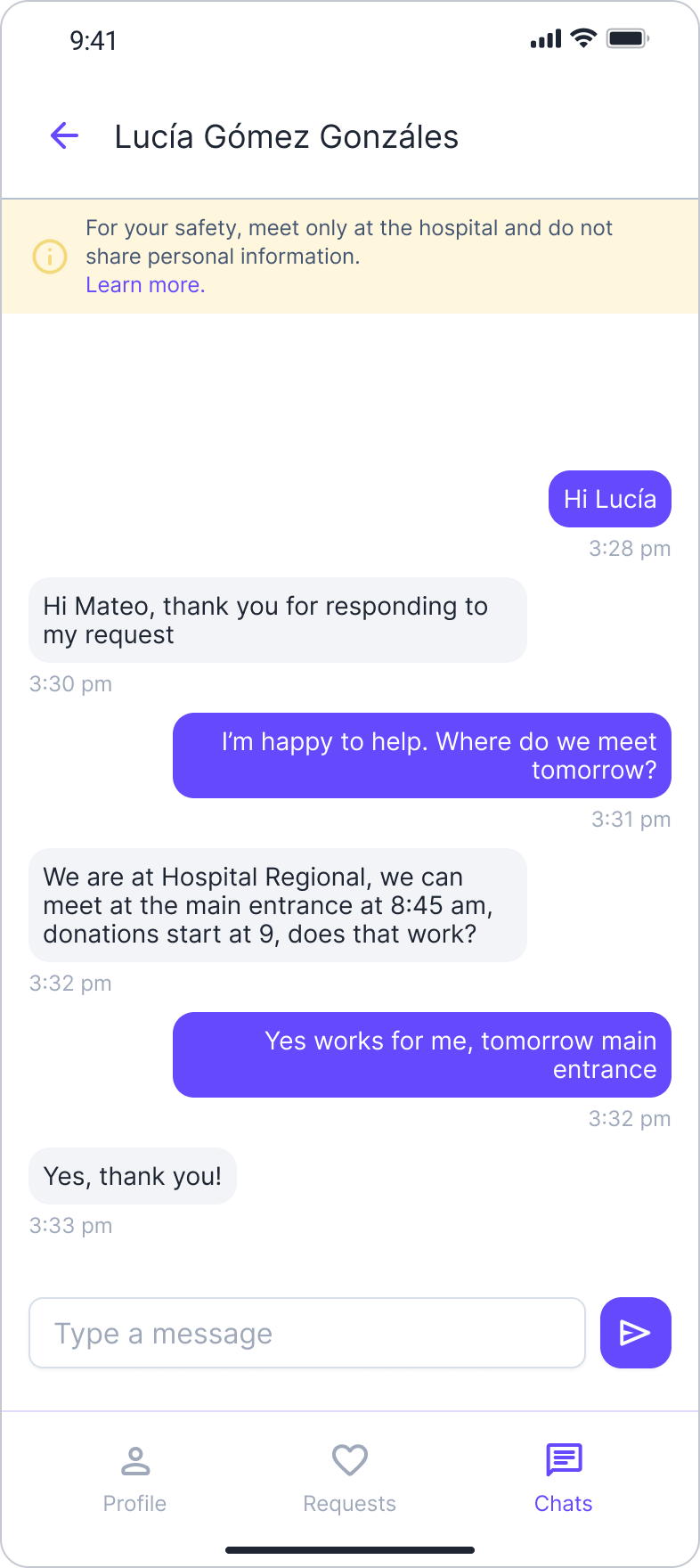
The chat opens only after the donor accepts. I didn't want donors to feel pressured, because that could make them less likely to come back. The goal is a donor who chooses, on their own, to give to someone they don't know. Then both agree on a date and time.
03
Recognition, not gamification
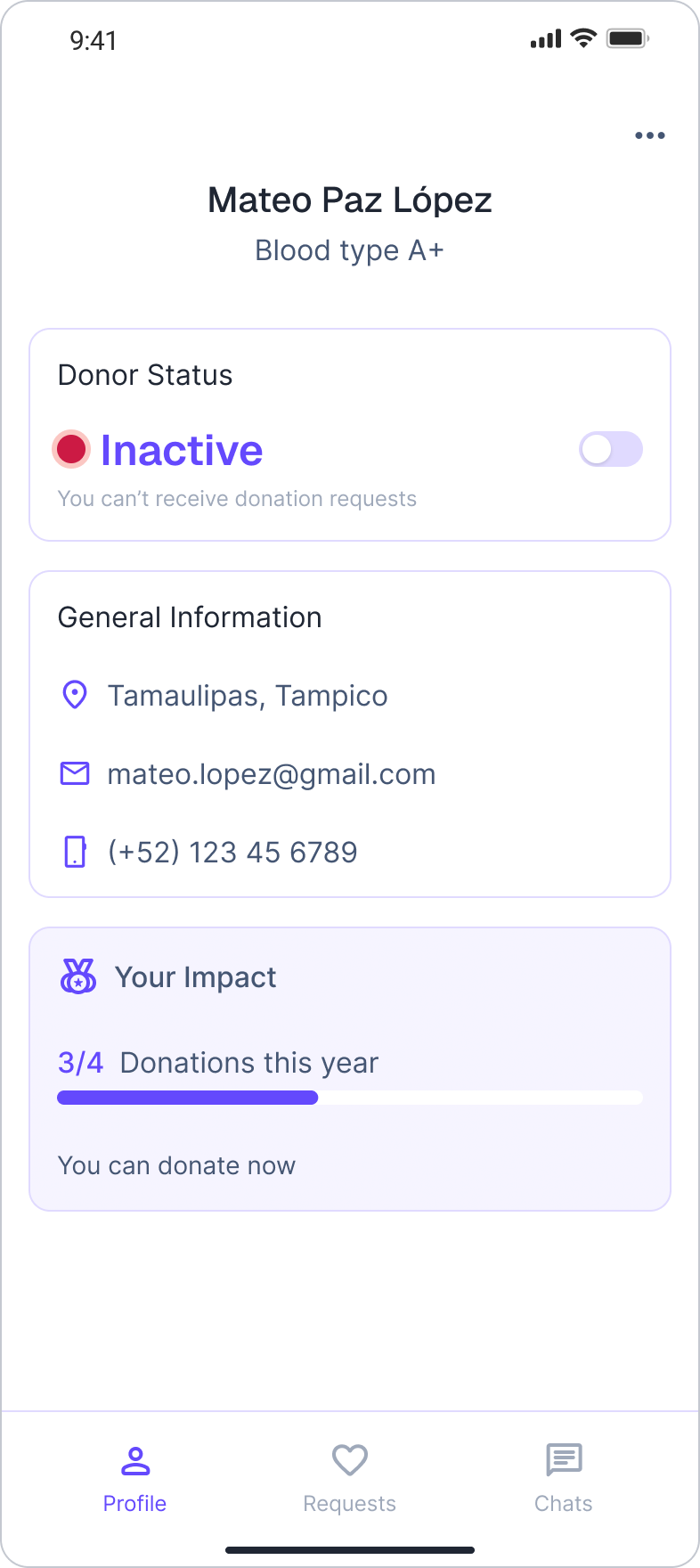
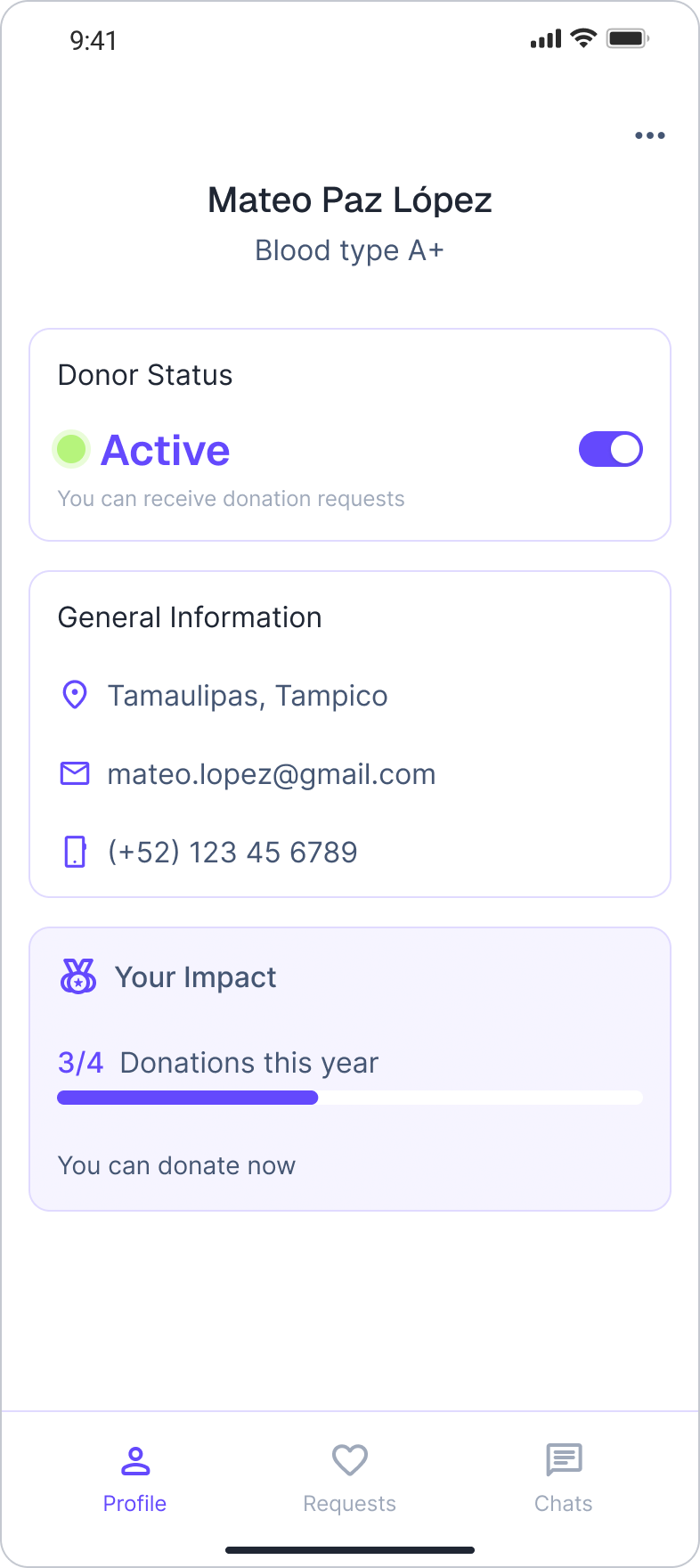
I left rewards out: donating blood shouldn't feel like earning points. Pulso keeps an impact history that recognizes what a donor has done, shown against the medical yearly maximum, which differs for women and men. In the survey, 70% of recent donors had given only once.
Gabinete, 2019 · n=754, near hospitals in Mexico City
Trade-offs
01
No stories means less bias, but less of the personal link
Donors see no stories or photos, so nobody gets help for being more moving. The name stays so both sides know they're real people. But 85.6% of past donors last gave because a relative or acquaintance needed it, so I may be removing what moves them. The informal tests checked the flows, not whether donors accept without a story.
Gabinete, 2019 · n=754, near hospitals in Mexico City
02
Two core flows and a simulated match, so it's not a working product
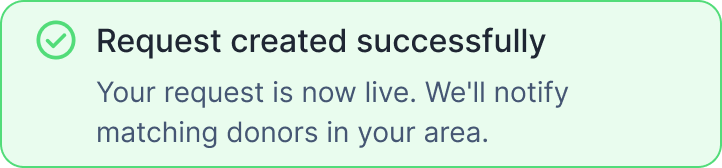
I kept the scope small on purpose: creating a request and accepting a donation, as a front-end prototype with a simulated match. Left out: onboarding, cancellations, request verification and how a two-sided app gets its first donors.
How I Work with AI
I gave Claude all the context and research, plus voice notes, and it drafted a PRD that I reviewed, corrected and narrowed into the guide. I designed every screen in Figma, using Claude to test layout options. Once the screens were final, Claude Code read them through the Figma MCP and built the front-end prototype. I designed, directed and decided.
What I Learned
I can take an idea from definition to a working prototype. I brought it, defined the product and its flows, designed every screen and had it built. Five friends and family tried the two core flows and only small details changed, like a confusing button that needed a label. Next, I'd test with real donors whether they accept without a story, and stop a donor who has reached the medical yearly maximum from accepting.