Fraud Investigation Platform
Product Design · Enterprise SaaS · Workflow Design
I designed a centralized investigation system to replace a manual process where 4,000+ cases were scattered across spreadsheets, shared drives, and email. Investigations could stall for months due to poor visibility into case status and next steps, putting the company at risk of paying fraudulent claims.
Impact
01
Faster case assignment
From 30 days to 1 day (post-launch result).
02
One centralized workflow
The fraud team moved its investigation work into a single platform, from initial fraud alerts to investigator payments.
03
Clearer next steps
The Action Center surfaced cases requiring each role's attention. Rule-based checks were designed to reduce unnecessary manual review.
Project Details
- 01Client
- Quálitas Insurance
- 02Timeline
- 12 months
- 03Team
- Sole Product Designer · Product Owner · Tech Lead · 15+ developers
Problem Framing
Around four administrators manually assigned cases across 30 analysts, without a clear view of individual workloads. Once assigned, cases could stall because teams couldn't easily see who needed to act next.
“We have no visibility of where the investigation is or what the next step is.”
The Challenge
How might we make the next action clear for every role without creating another thing to track?
Key Decisions
01
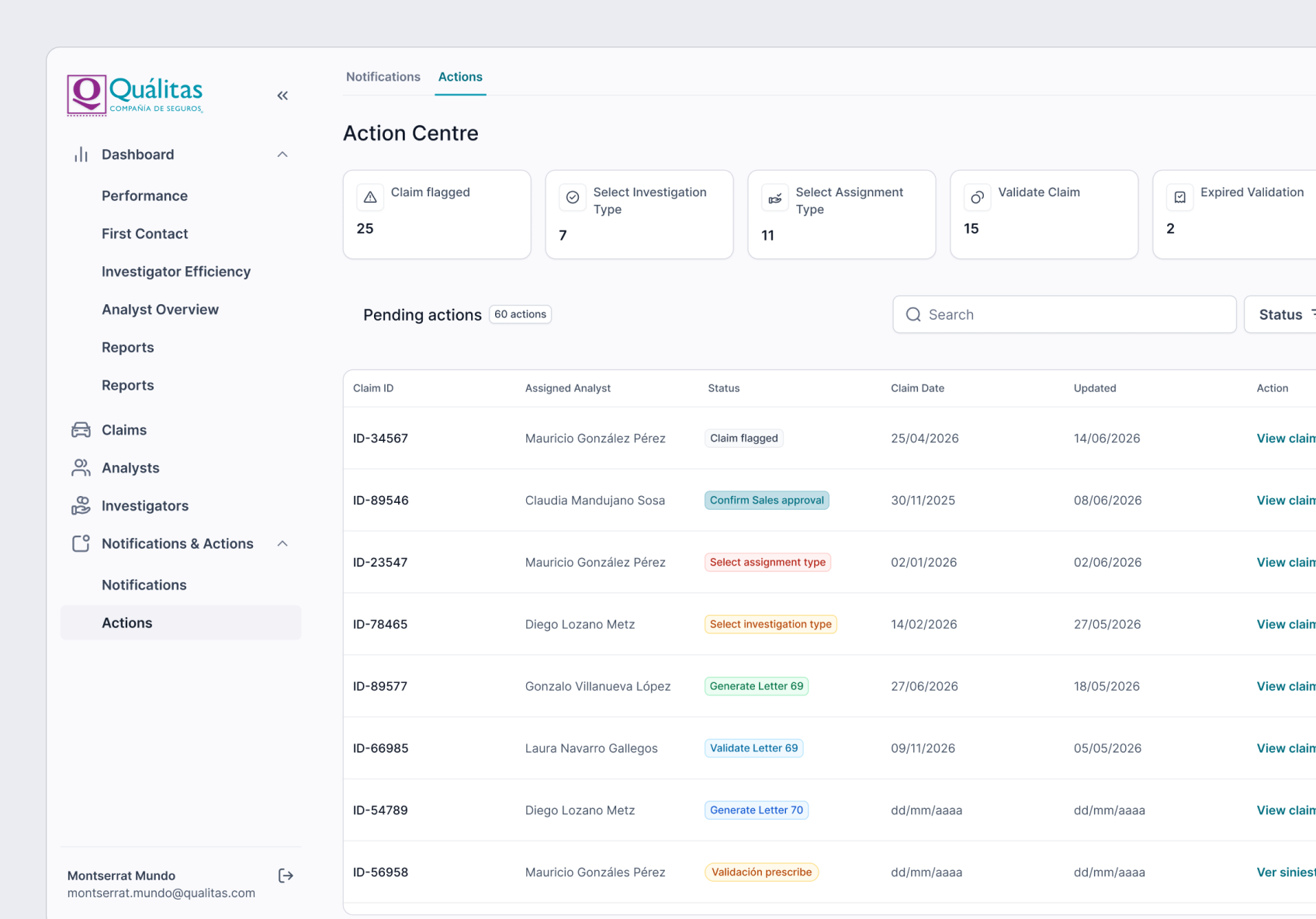
Action Center
Notifications surfaced updates across cases, creating information overload. I designed an Action Center that filtered out updates requiring no action, showing each role only the cases waiting on them.
The goal was to make next steps clearer and help keep investigations moving.
02
Automatic assignment
I worked with the team to introduce an analyst management view, giving administrators visibility into assigned cases and workloads, alongside automatic assignment based on workload and business rules.
This reduced reliance on manual assignment and gave administrators a clearer way to distribute incoming cases.
03
Defining a complex legal workflow
The process involved 4 roles, 20 decision points, 5 legal deadlines, and multiple approval and correction paths.
I led product definition and UX design, partnering with the Product Owner and Tech Lead on product decisions. I structured the workflow into five phases, validated flows with analysts, and reused proven patterns to deliver a clear, compliant experience within a tight timeline.
04
Automating rule-based decisions
Working with the Product Owner and Tech Lead, we identified opportunities to replace manual intervention with automation wherever clear business rules allowed.
For example, we designed a rule to automatically reject invoices exceeding the daily limit for a given expense type, preventing them from entering manual review.
Trade-offs
01
A consistent pattern under a tight deadline
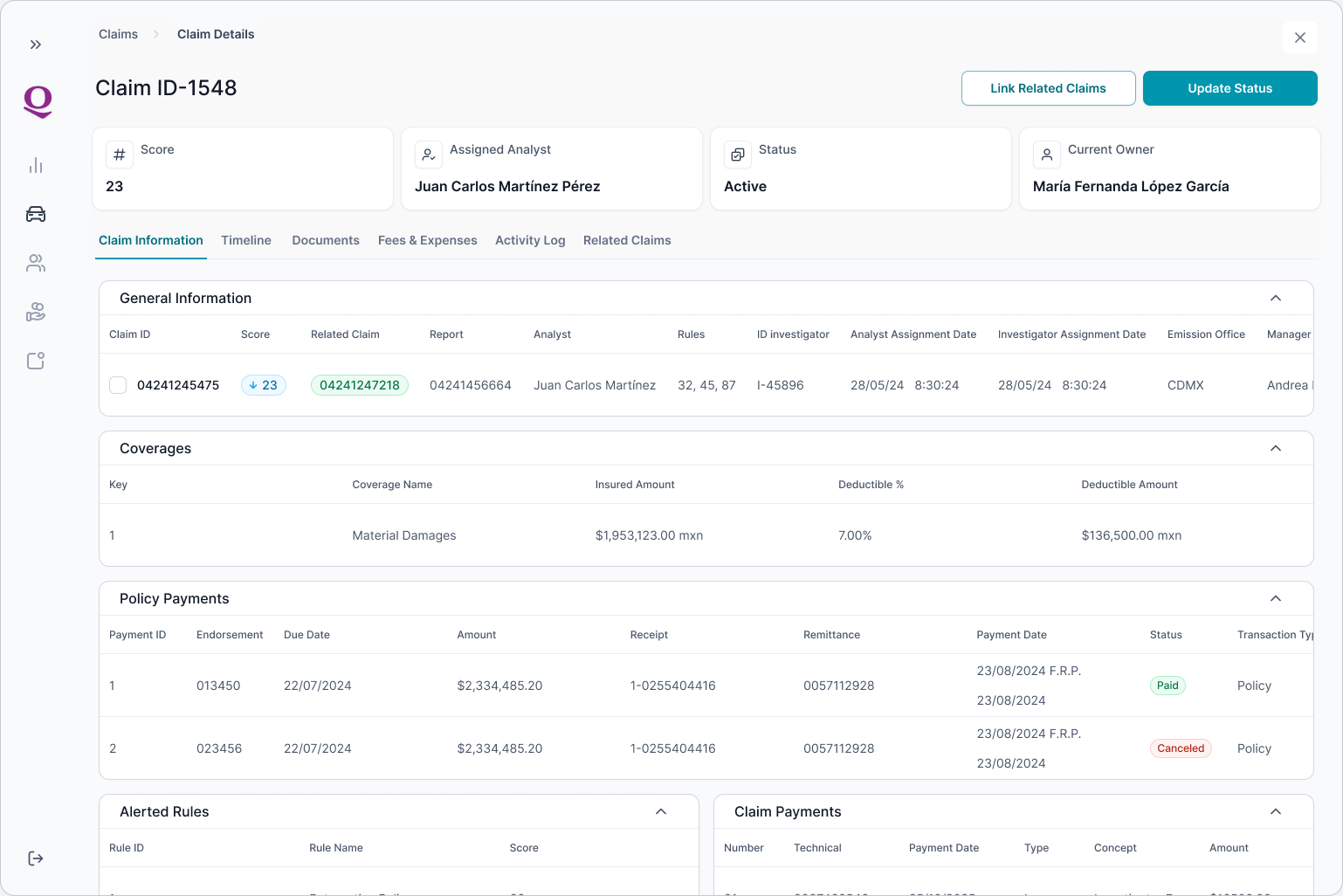
With a fixed 12-month deadline, I designed a consistent interaction pattern: decisions were made from the case detail, with a modal only when additional input was needed. After confirming feasibility with the Tech Lead, I defended the approach and secured team approval.
The trade-off was a repetitive experience across actions. I prioritized a feasible solution over a more refined interaction design the timeline wouldn't allow.
02
Exceptions without a dedicated workflow
We couldn't build a dedicated workflow for exceptions to validation rules before the deadline. Instead, exceptional cases were documented in comments, without a structured way to track and resolve them.
What We Delivered
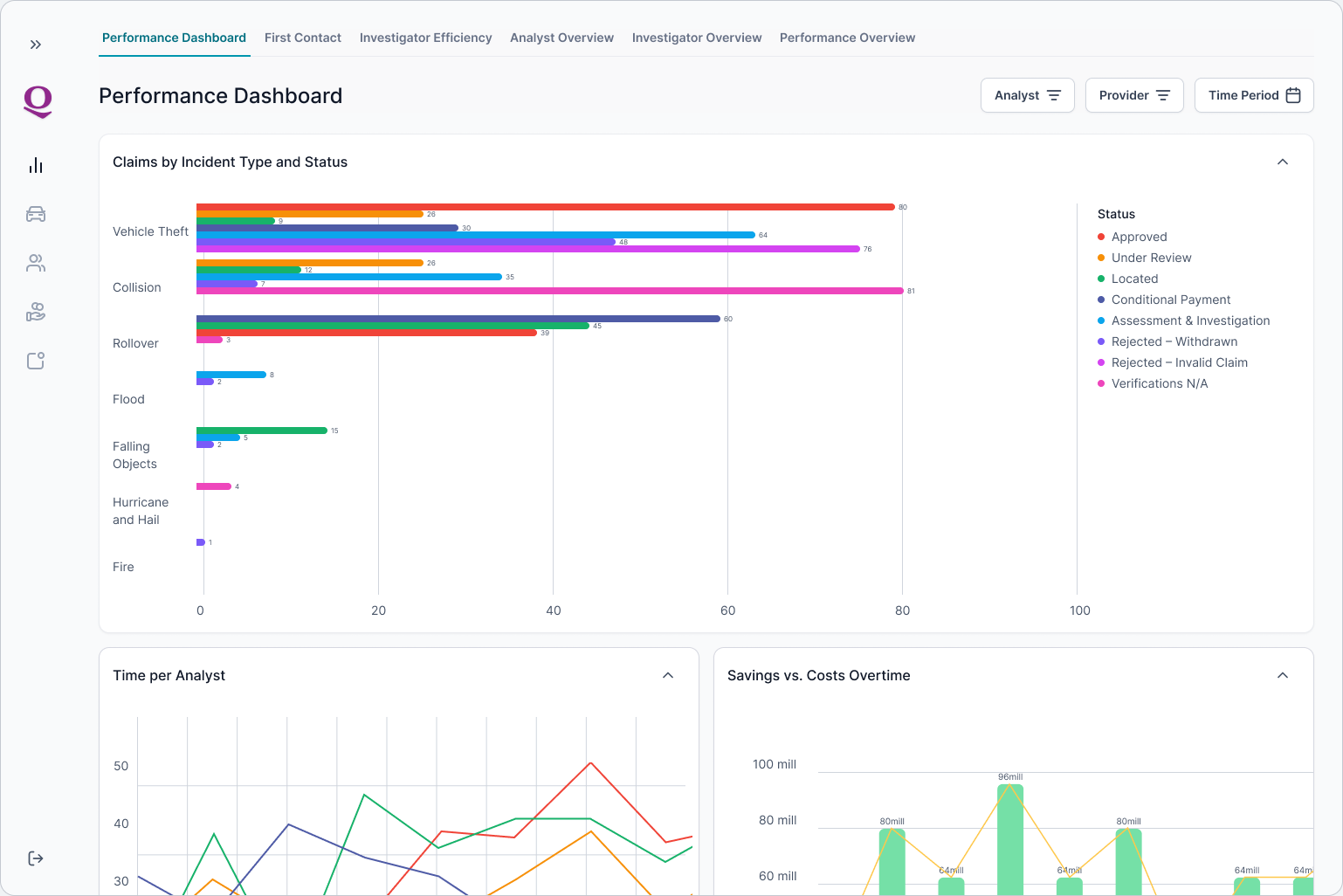
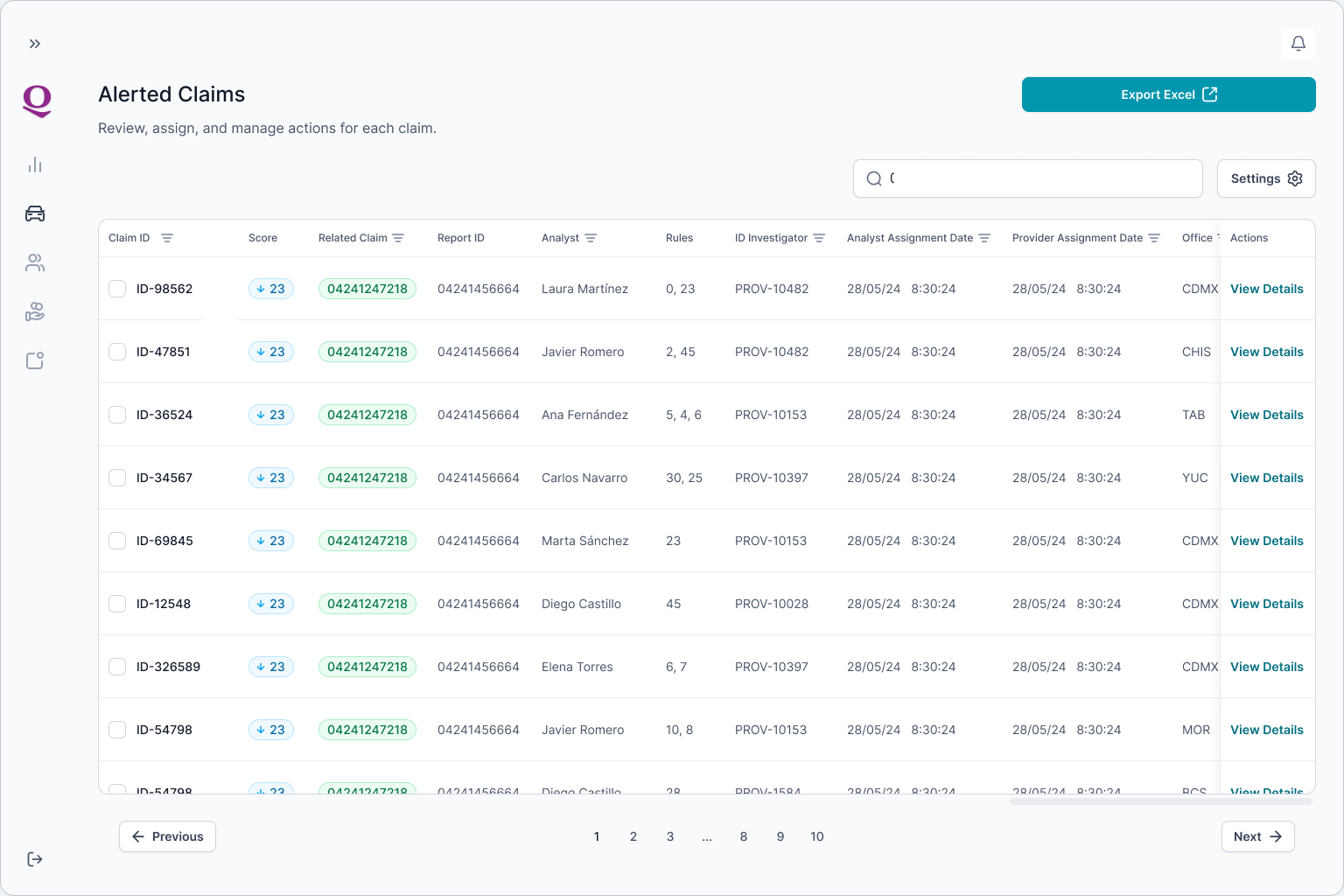
A centralized platform covering the full fraud investigation lifecycle, supported by a live dashboard showing case status across the process. The system brought investigation work into one place and made case progress more visible to the teams involved.
What I Learned
01
A detailed handoff wasn't enough
Despite a detailed handoff, rework persisted because developers hadn't participated in flow validation sessions with the client and Product Owner.
I introduced weekly walkthroughs using a basic prototype to explain how flows worked and why decisions had been made. Rework dropped, reinforcing the value of involving developers throughout design, not just at handoff.
02
What I'd explore next: AI as an investigation partner
I'd explore an AI assistant that answers questions about cases, suggests next steps, and surfaces similar cases that could reveal fraud patterns, while keeping final decisions in investigators' hands.