Digital Cards
Product Design · B2B2C · Insurance
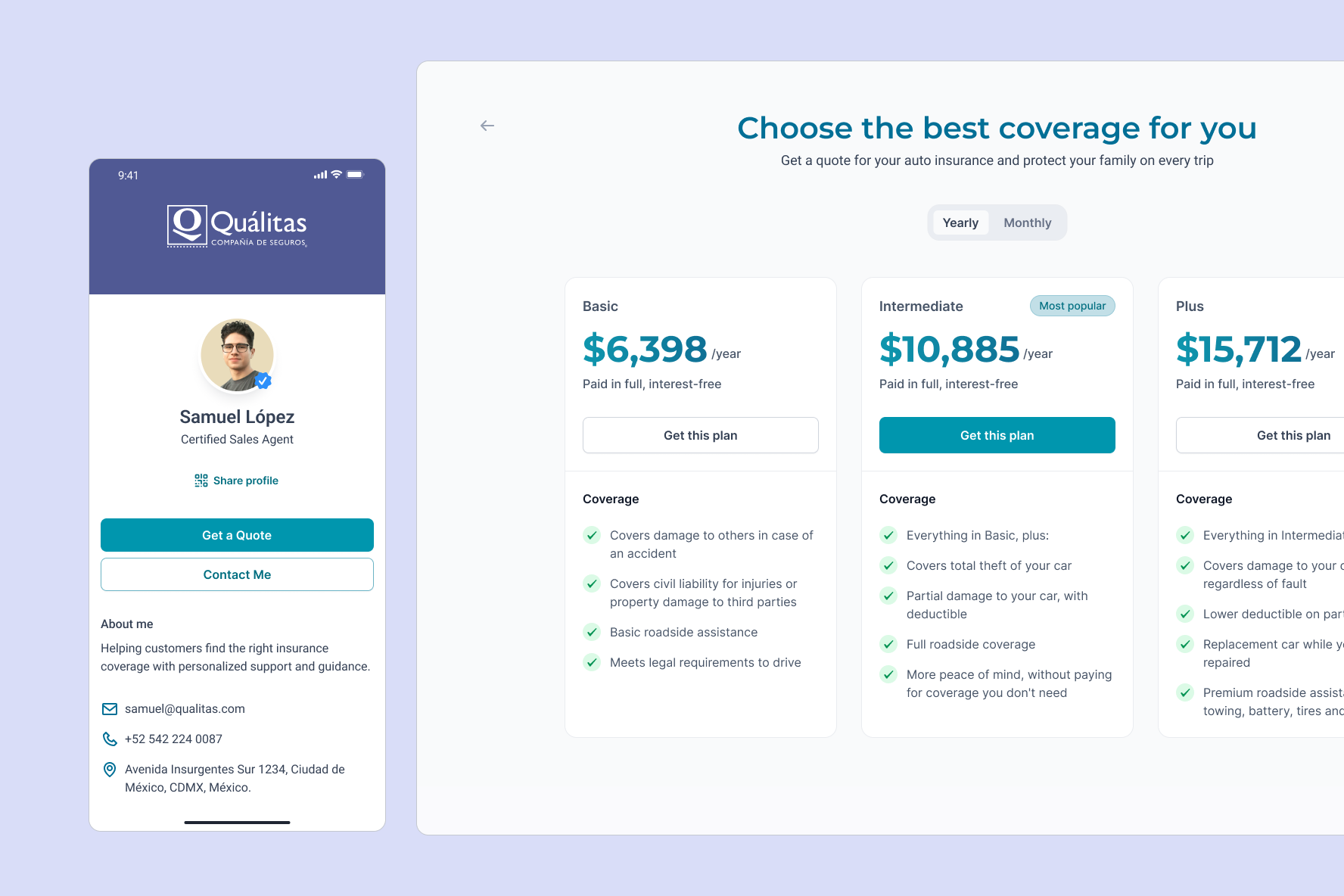
I designed an end-to-end digital sales system for Quálitas insurance sales reps, who traditionally sold policies over the phone. The platform combined shareable digital profiles, an online quote and application flow, and a dashboard where reps could track leads and review vehicle inspections to approve policy purchases.
I led discovery and defined the system’s user flows and features, expanding the original brief from digital ID cards into a broader sales solution.
Before / After
01
Sales process
Reps handled sales over the phone and completed applications on behalf of customers → Customers could get a quote and submit their application online.
02
Lead tracking
Reps had no centralized view of their prospects or sales status → Each lead was automatically linked to the rep’s dashboard, with status visibility for follow-up.
03
Customer trust
Impersonation fraud had been reported → Shareable digital profiles gave customers a way to verify their sales rep.
Project Details
- 01Client
- Quálitas Insurance
- 02Timeline
- 4 months
- 03Team
- Sole Product Designer · Tech Lead · 5 developers
Problem Framing
The initial brief was to create digital ID cards to help customers verify the legitimacy of Quálitas sales reps. Since reps relied on social media and messaging apps to reach potential customers, cases had been reported of people impersonating legitimate reps to commit fraud.
During discovery, I identified that the sales process was largely manual, and reps lacked a centralized way to track leads. We proposed expanding the scope from digital ID cards to an end-to-end digital sales system. Since Quálitas was already looking to improve its sales processes, stakeholders agreed to the expanded scope.
The Challenge
How might we build a sales system that fits how sales reps already sell, instead of asking them to adopt a new tool?
Key Decisions
01
Starting the sales journey from each rep’s profile
Sales reps earn commission, so every lead needed to be attributed to the person who brought it in. Asking customers to identify their rep would add friction and risk attribution errors.
I proposed embedding the quote flow into each rep’s digital profile. Every quote started through that profile was automatically linked to the rep and recorded in their dashboard.
02
Simplifying a regulated application
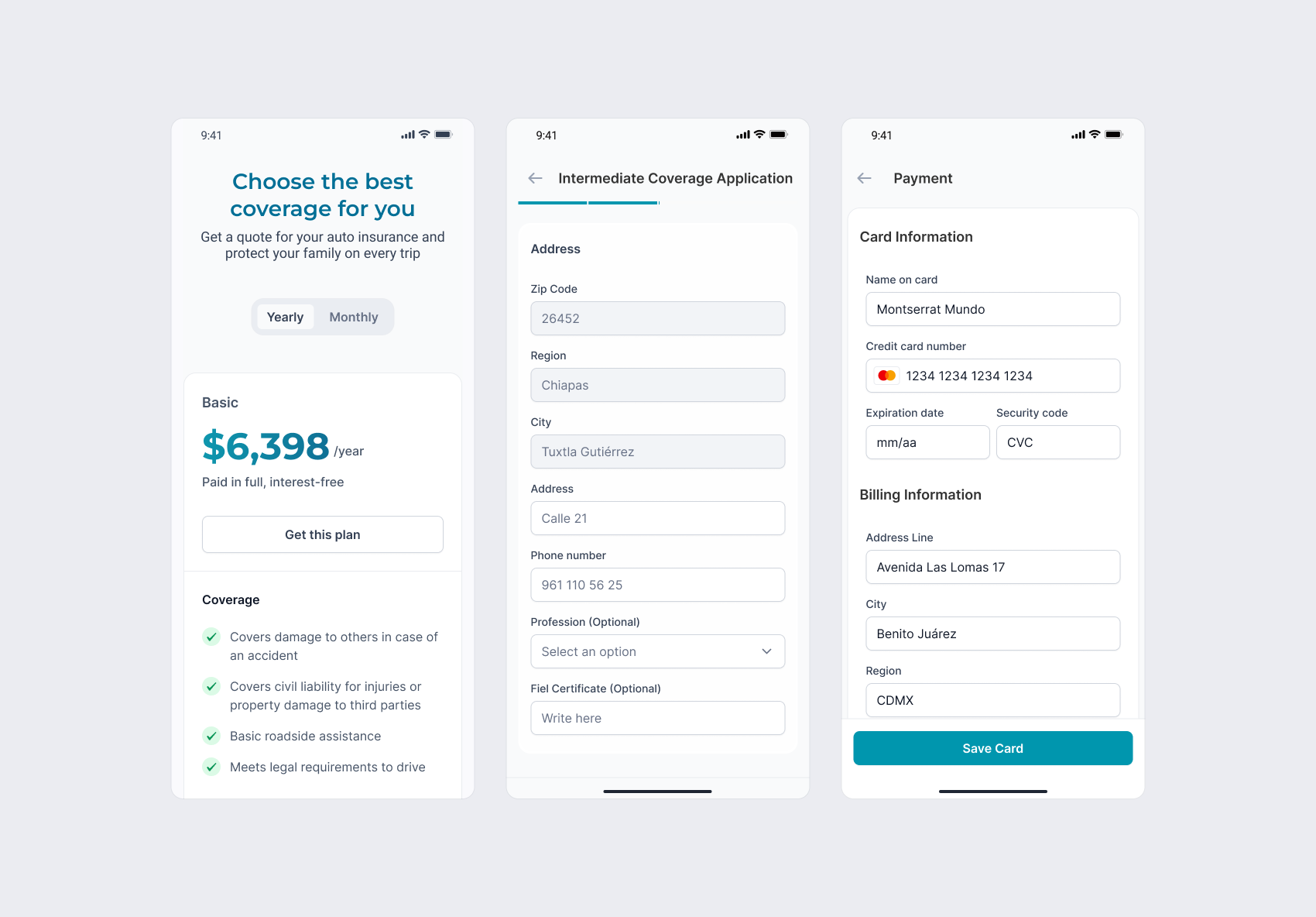
Previously, reps completed applications on behalf of customers over the phone. Moving the process online meant customers had to complete the form themselves.
Because the form was regulated, I couldn’t remove required fields. I broke it into four steps, pre-filled information already provided during the quote, simplified the language where possible, and added tooltips to clarify fields users struggled with during quick usability tests.
03
Designing an actionable lead dashboard
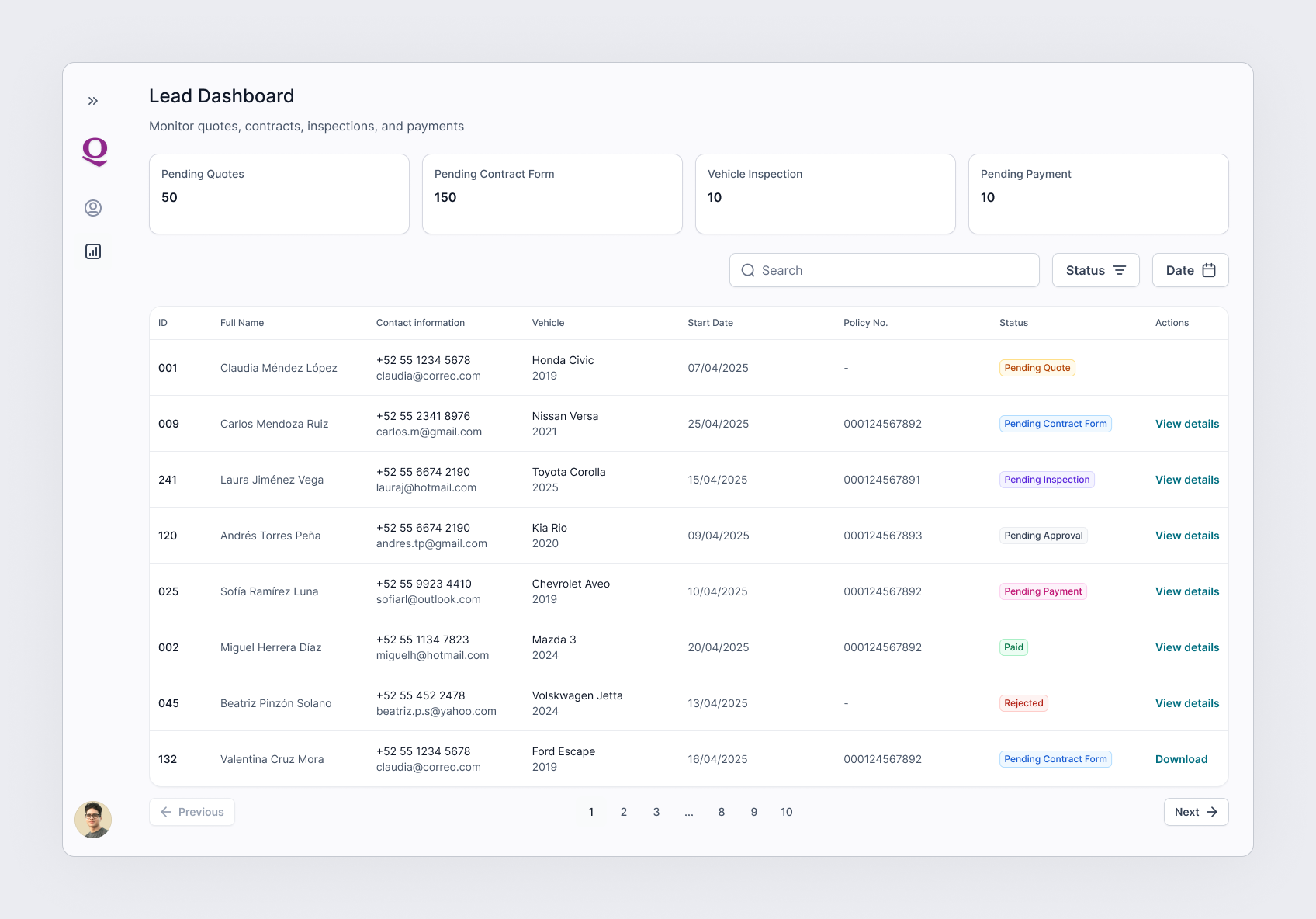
Reps needed a central place to review leads and decide what to follow up on next. I designed a dashboard that surfaced key lead statuses and centralized prospect and customer information.
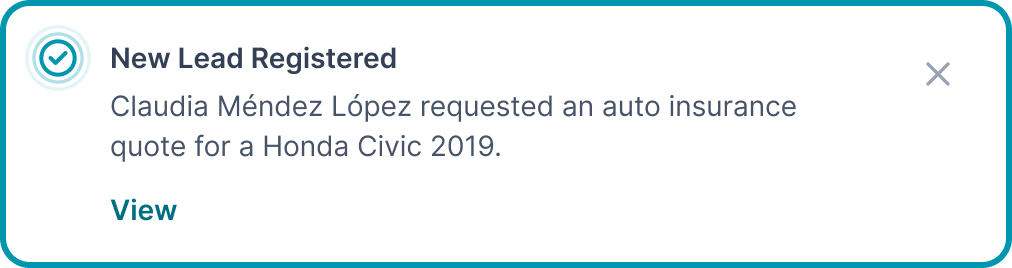
I also defined how lead statuses changed throughout the sales flow. The dashboard notified reps when customers completed their vehicle inspections and provided access to the photos so reps could review them and approve or reject the application.
Trade-offs
A connected journey vs. existing platforms
I advocated for integrating vehicle inspection and policy payment into the new sales journey. However, Quálitas already had separate platforms for these steps, and redesigning them would have affected other products that relied on the same tools.
Given the four-month timeline and these dependencies, stakeholders decided to keep both steps on the existing platforms. I removed the payment gateway screen I had designed from scope, while the new system connected the journey through inspection links, rep approval, payment links, and payment status tracking.
The Sales Process, Before and After Digital Cards
The new flow brought key sales steps online and gave sales reps visibility into lead progress.
- 7pain points identified in the original sales process
- 4stages tracked automatically
- 0calls needed to get a quote and submit an application
- 2Pain points at this step
- 1Tracked stage
- Visibility for the sales rep
What I Learned
01
Product definition is part of design
With no Product Owner, I took ownership of key product decisions, from quote entry and lead attribution to application structure, platform handoffs, and lead tracking. This project pushed me beyond designing screens and into defining how the product should work, balancing customer needs, business requirements, and technical constraints.
02
What I’d measure next
I’d track quote-to-application completion, drop-off at each step, and lead follow-up time to evaluate how well the system supported the sales process. I’d also explore integrating vehicle inspection and payment to reduce handoffs and create a more seamless customer experience.